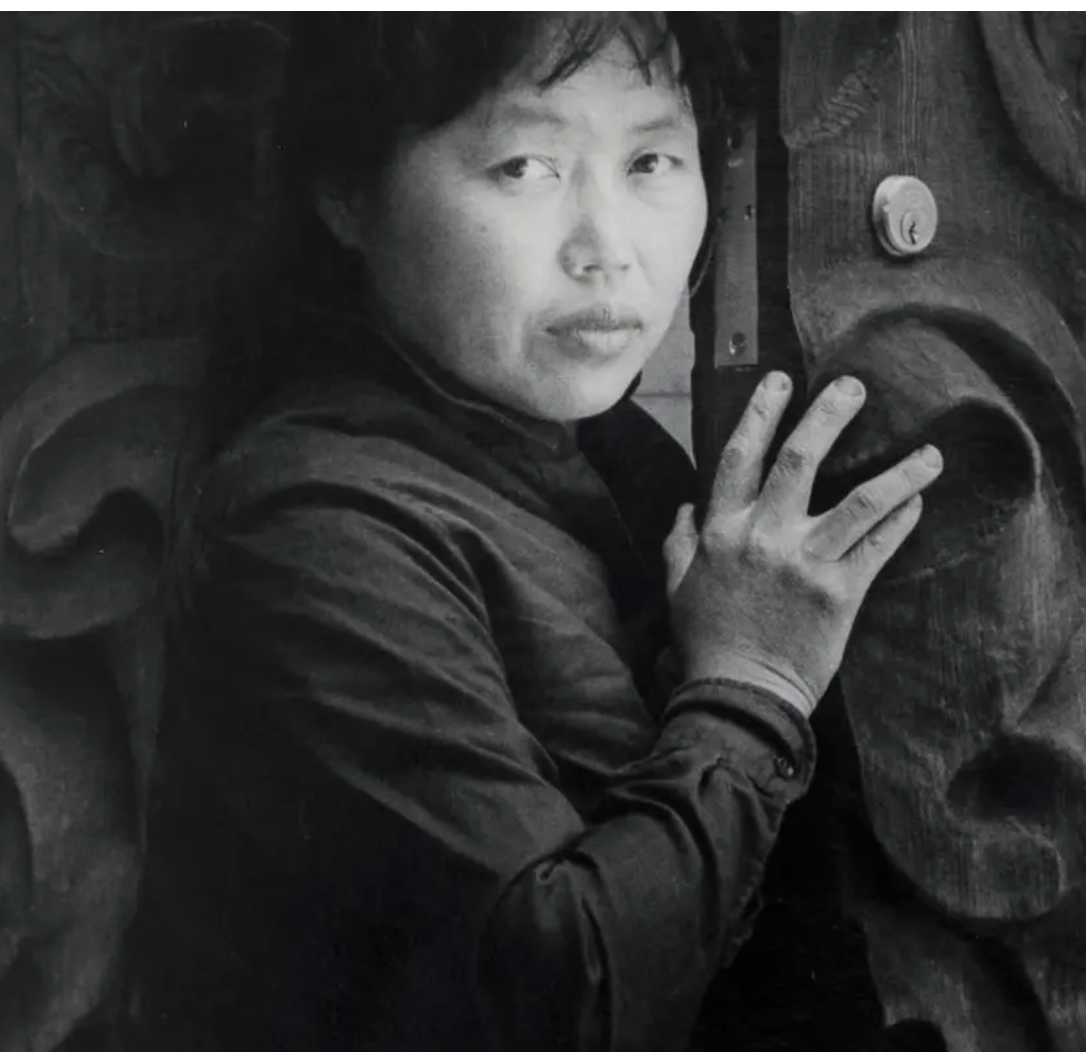
Ruth Asawa
(1926-2013)
American modernist artist
“Because I had the children, I chose to have my studio in my home. I wanted them to understand my work and learn how to work.”
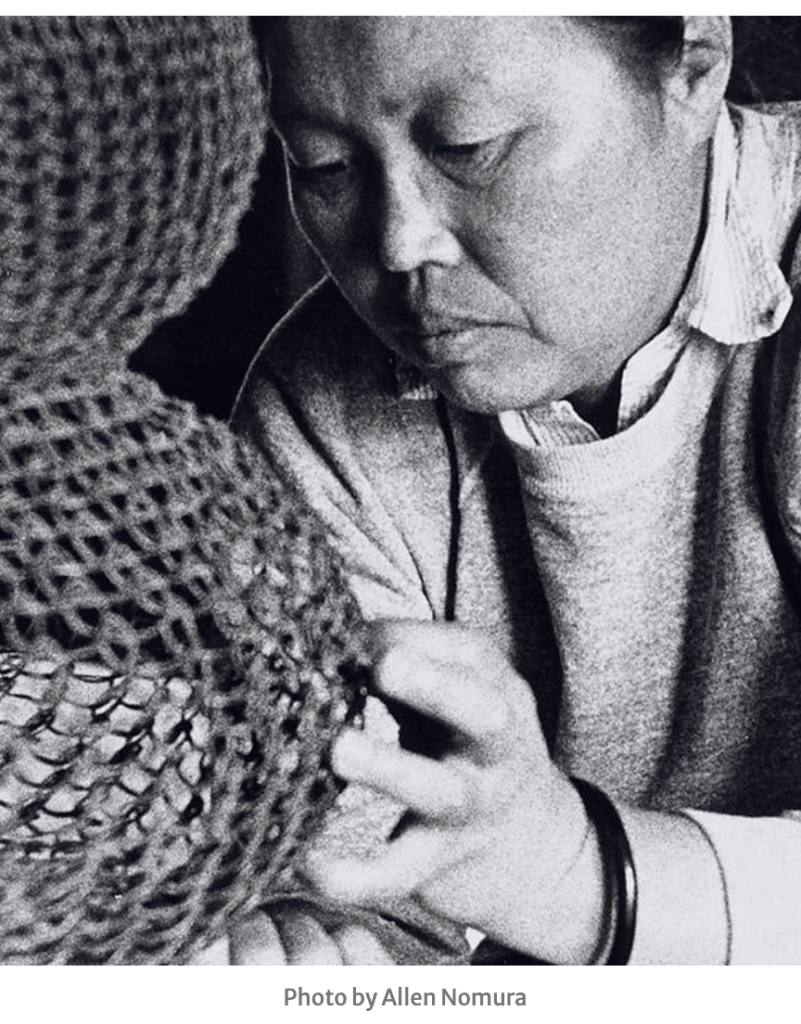
Asian Americans have long been treated as a threat in the USA from the spread of xenophobic propaganda to the infamous Japanese internment camps during WWII. Running parallel was the idea that women didn’t deserve same rights as men and there were dire warnings that motherhood would ruin the artist. Most artists hide any hint of them being a mother or housewife. As a Japanese American women creating art in the 1950s, Ruth Asawa proved all the stereotypes wrong.
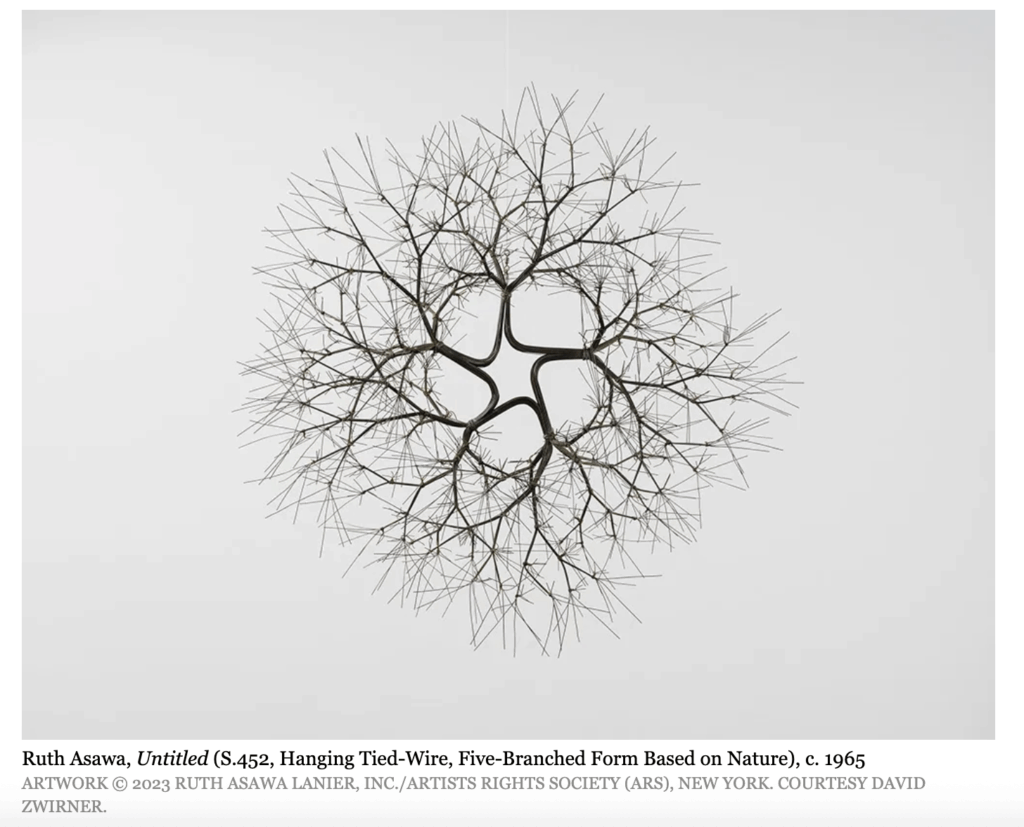
She refused to see motherhood as an obstacle to creating art while rejecting the idea of the Asian American as an outsider to the community. She became famous for her sensuously looped wire sculpture inspired by natural and organic forms but also as an art educator. Over six decades, she effortlessly wove being an artist parent, educator and civic leader into an incredible legacy.
Asawa was the daughter of two Japanese farmers who emigrated to California. In 1942 she interned into one of the Japanese American prison camps set up by the USA government. She got some of her art training from three Walt Disney animators also imprisoned with her.
Initially she wanted to become a teacher but was denied a teacher’s license because of her Japanese ancestry. She joined the avant-garde artistic community at Black Mountain College where she began her experimenting with her looped-wire sculptures after learning Mexican basket crocheting techniques. In 1949, she married Lanier and they moved to San Francisco, one of the few American cities where inter-racial marriage had been made legal. Between 1950 and 1959, the couple would have six children.
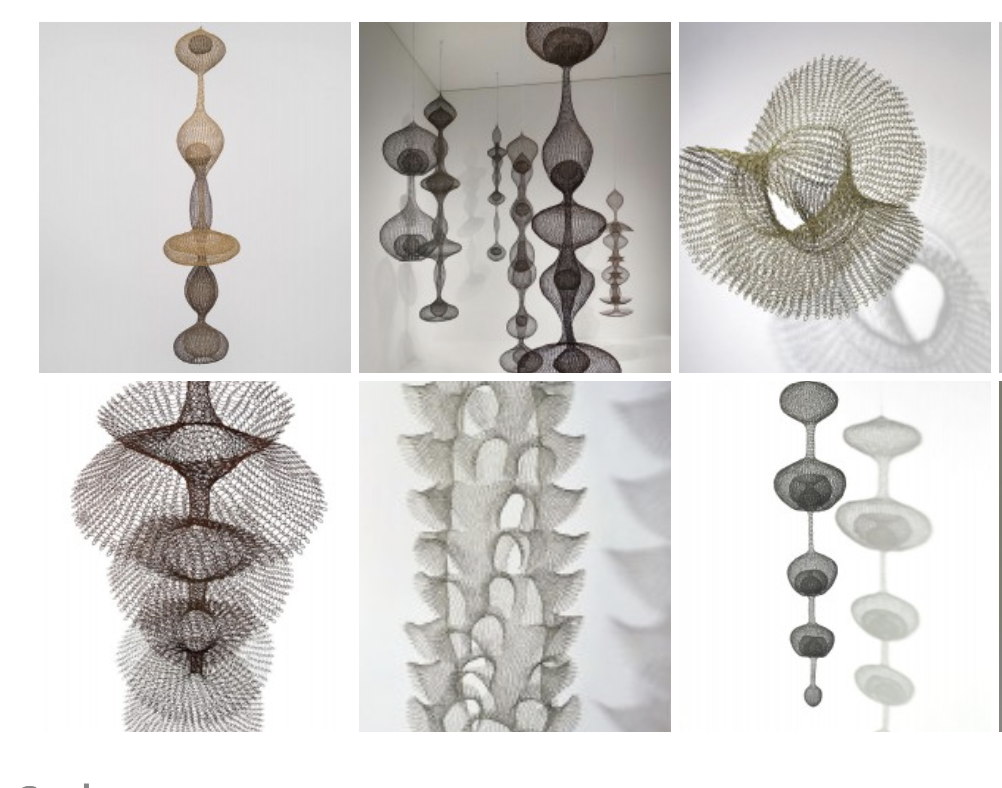
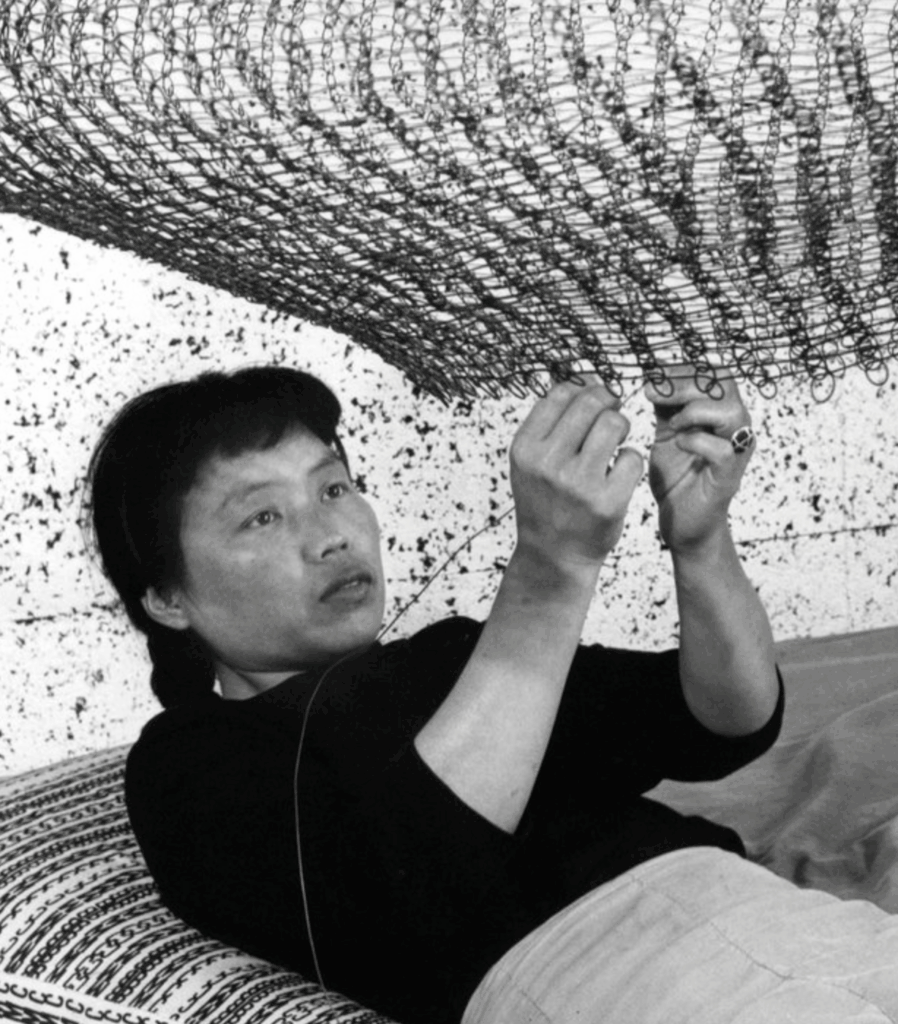
Asawa made her family life inseparable from her art, creating her famous looped wire structures at the kitchen table. She encouraged her children to participate. In 1955, she held her first exhibition in New York and by the early 1960s, she had achieved commercial and critical success.[1] Her philosophy about art was simple: an artist’s relationship with their materials is like that of parent and child: “You become the background, just like the parent allows the child to express himself.” [2]
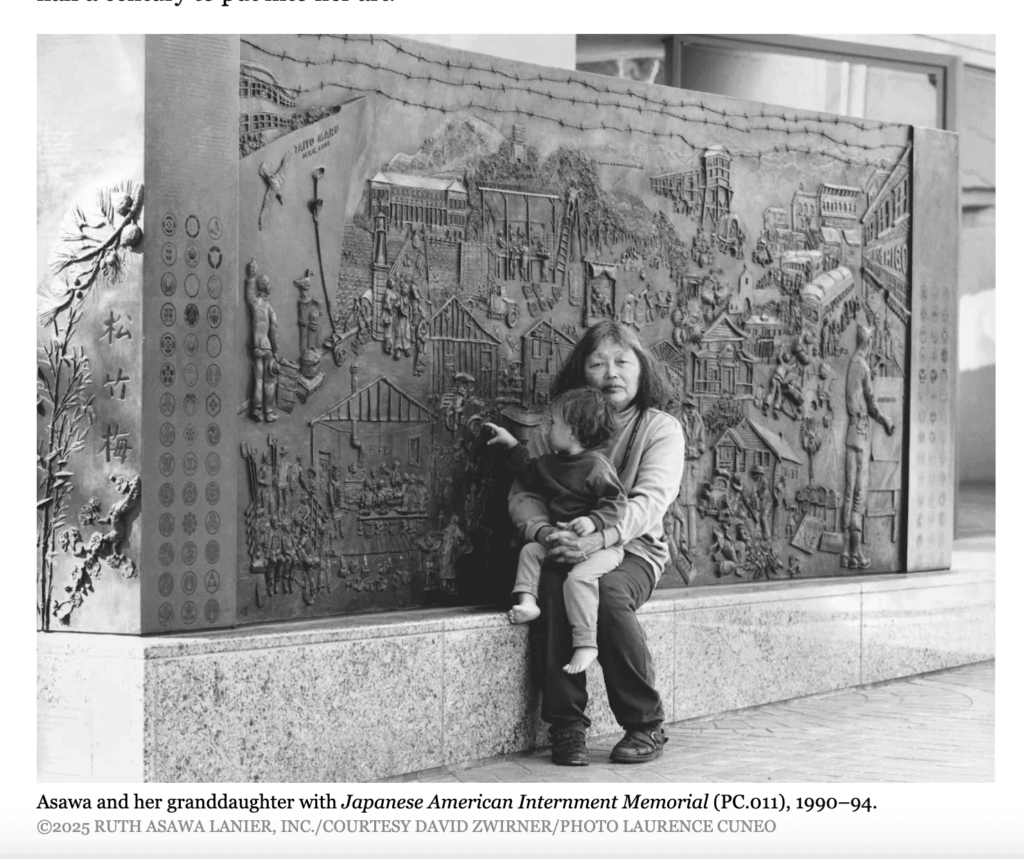
As well as working as an artist, Asawa became advocate for public art and art education. Both Lanier and Asawa worked on projects to improve San Francisco’s public spaces and Asawa campaigned to have professional artists brought into the classroom to teach. She also loved gardening and set up community gardens throughout the city.
Asawa didn’t just make art while raising children. She showed us motherhood was quite compatible to art since the skills of motherhood are inherently artistic.
At 76, she created her final public commission. The Garden of Remembrance at San Francisco State University, a memorial to the Japanese Americans interned during World War II.
[1] https://en.wikipedia.org/wiki/Ruth_Asawa
[2] https://ruthasawa.com/introduction-to-ruth/
Read more
https://en.wikipedia.org/wiki/Ruth_Asawa
https://www.artnews.com/art-news/reviews/ruth-asawa-retrospective-sfmoma-review-1234740060
https://apnewsweek.com/ruth-asawas-astonishing-universe-began-at-her-door
https://www.davidzwirner.com/exhibitions/2021/ruth-asawa-all-is-possible
https://www.nytimes.com/2025/04/04/arts/design/ruth-asawa-sfmoma-san-francisco.html