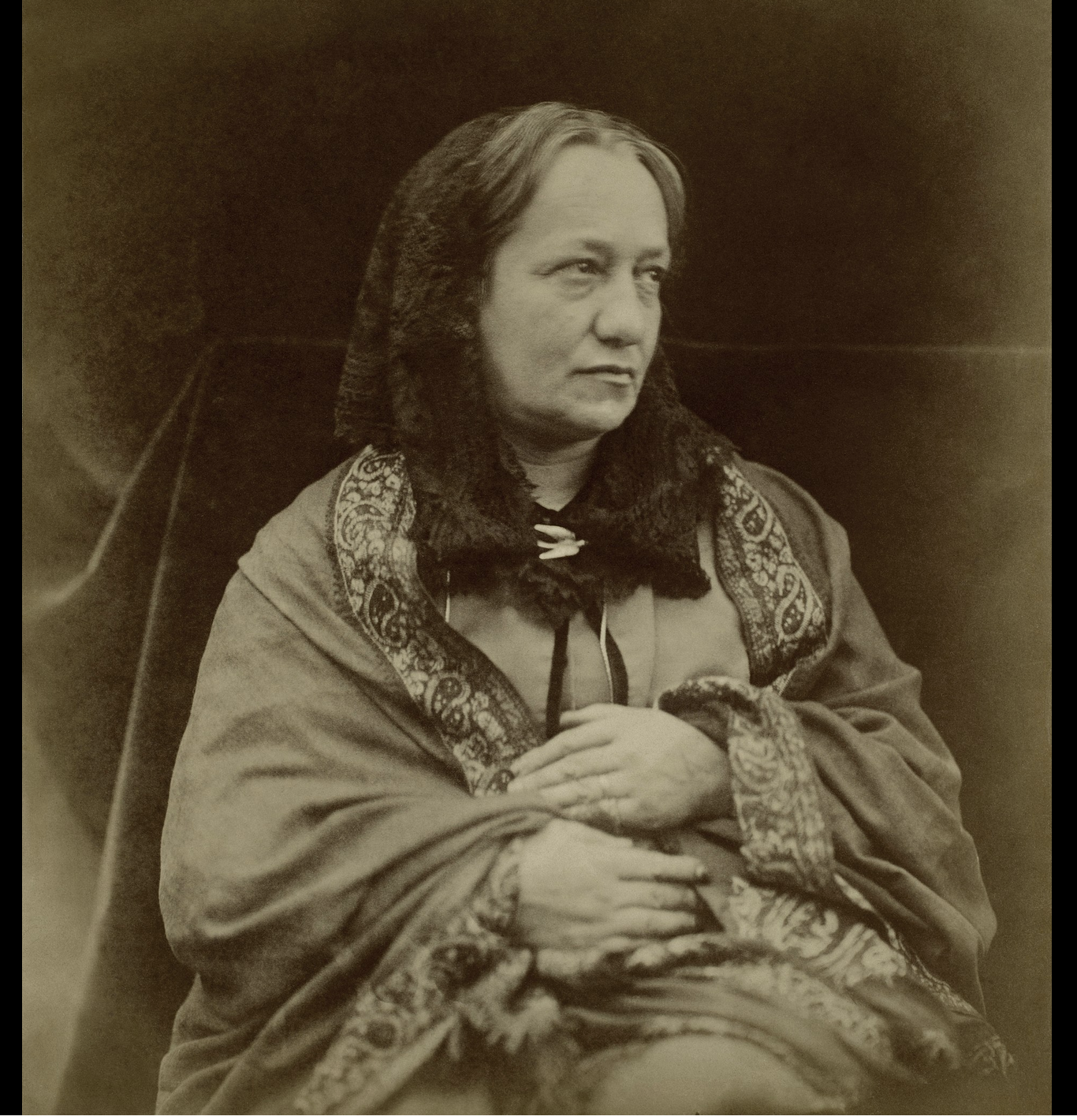
Julia Margaret Cameron
(1815–1879)
British Photographer
“From the first moment I handled my lens with a tender ardour, and it has become to me as a living thing, with voice and memory and creative vigour.”
In the mid-1800s, photography was still in its infancy but like most of Victorian Britain it was overwhelmingly male dominated. Women were thought to be too demure and dainty to handle the large camera equipment or to be exposed to the dangerous chemicals.
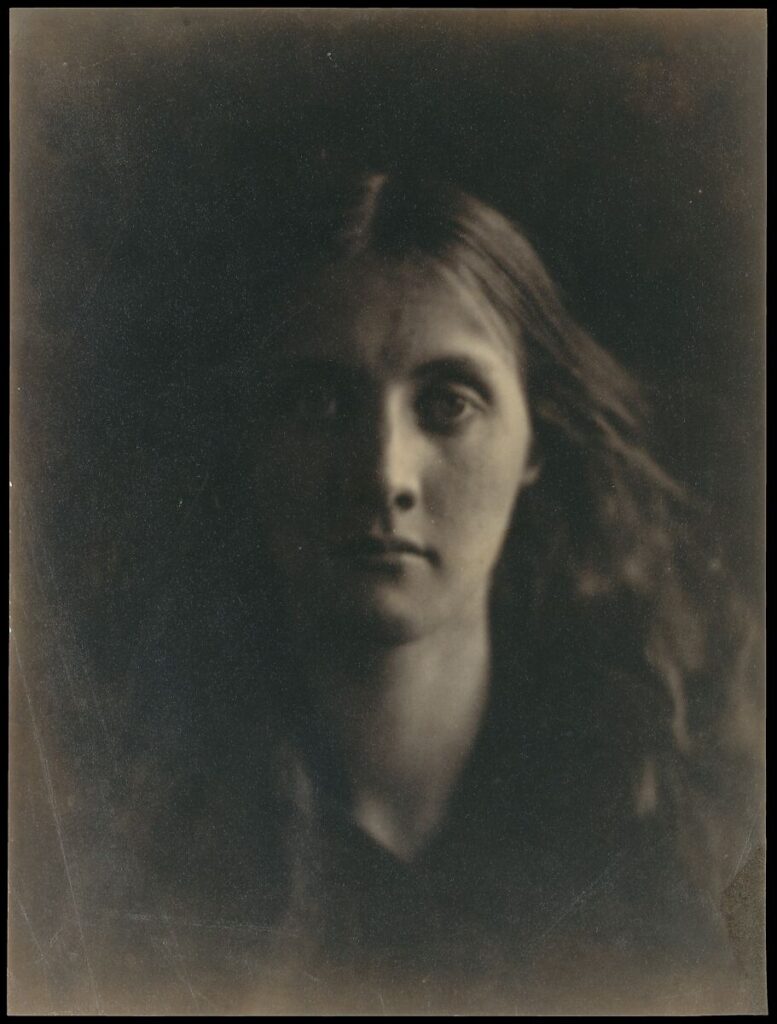
At 48, Julia Margaret Cameron picked up her camera and created a new genre of photography.
She was born in Calcutta as part of the Anglo-Indian upper class (her father worked for the East India Company.) In 1838, she married Charles Hay Cameron, a distinguished British civil servant. Together they would have had six children and adopt five more.
In 1845, they moved to London eventually settling on the Isle of Wight, a popular location for Britain’s cultural elite where Julia became the eccentric friend of Victorian England’s poets, writers, historians and scientists that included Charles Dickens, Alfred Lord Tennyson, Thomas Carlyle and John Herschel.
In 1863, her grown daughter gave Cameron a camera with a note: “It may amuse you, Mother, to try to photograph during your solitude at Freshwater.”[1] (Her husband had recently left on a business trip to visit their coffee plantation in Sri Lanka.) Cameron immediately converted a chicken coop into her studio and a coal bin into her darkroom to begin experimenting with the newest technique of wet collodion processing.
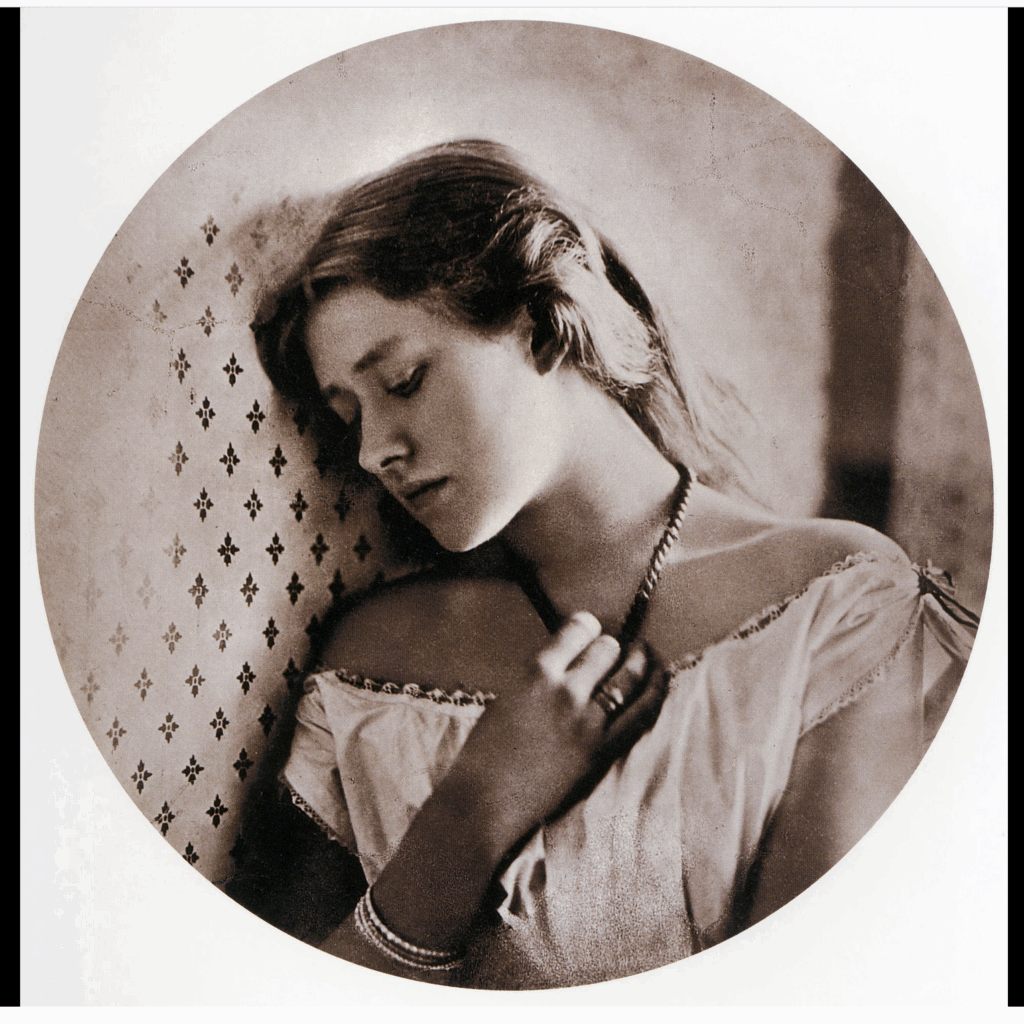
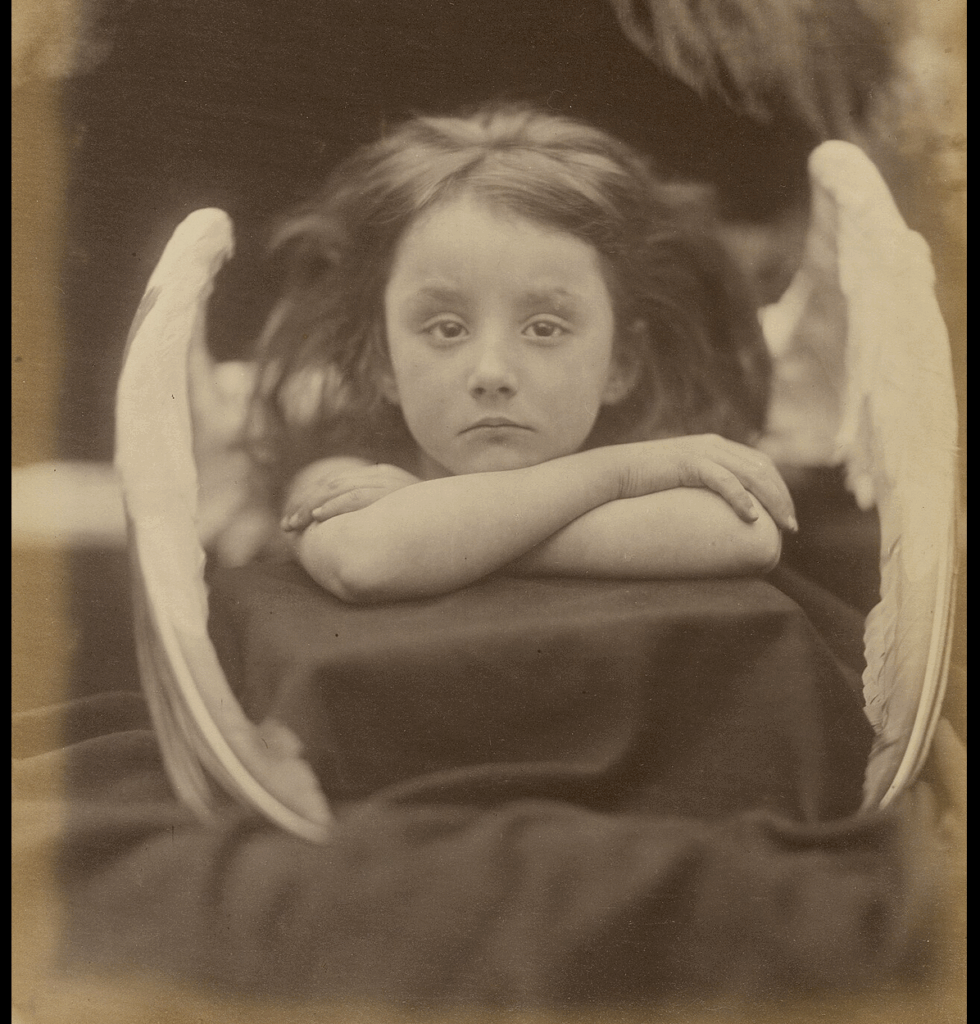
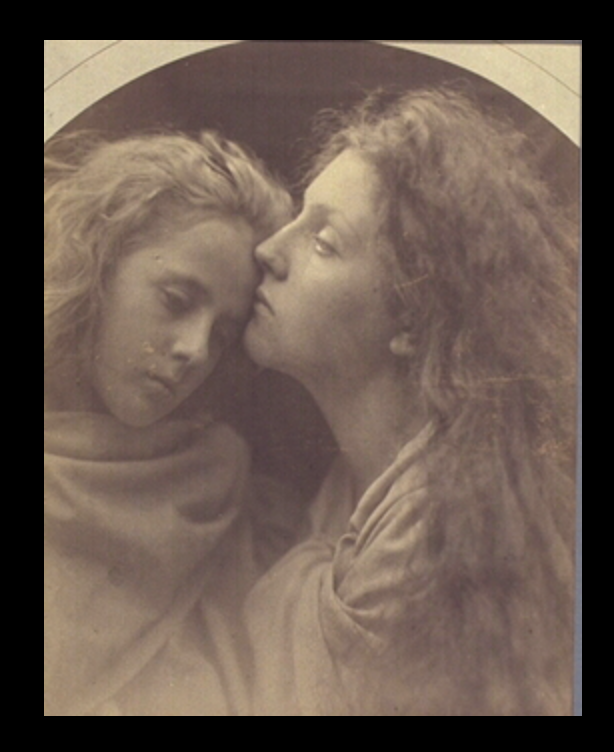
She started taking portraits of her famous neighbours and friends: the writers, the poets, historians, artists, thinkers and scientists. But she also used local people as well as her family and servants for her models in her allegorical tableau vivants that copied mythology, classic painters and religious stories.
She was a predecessor of the family album.[1] Cameron was one of the first photographers to to use the close-up soft focus in portraiture where there is nothing to distract from the person’s face. She was immediately ridiculed by the established photography community and critics dismissed her as an amateur with no technique.
But the artistic community took note applauding her work for its originality and authenticity.
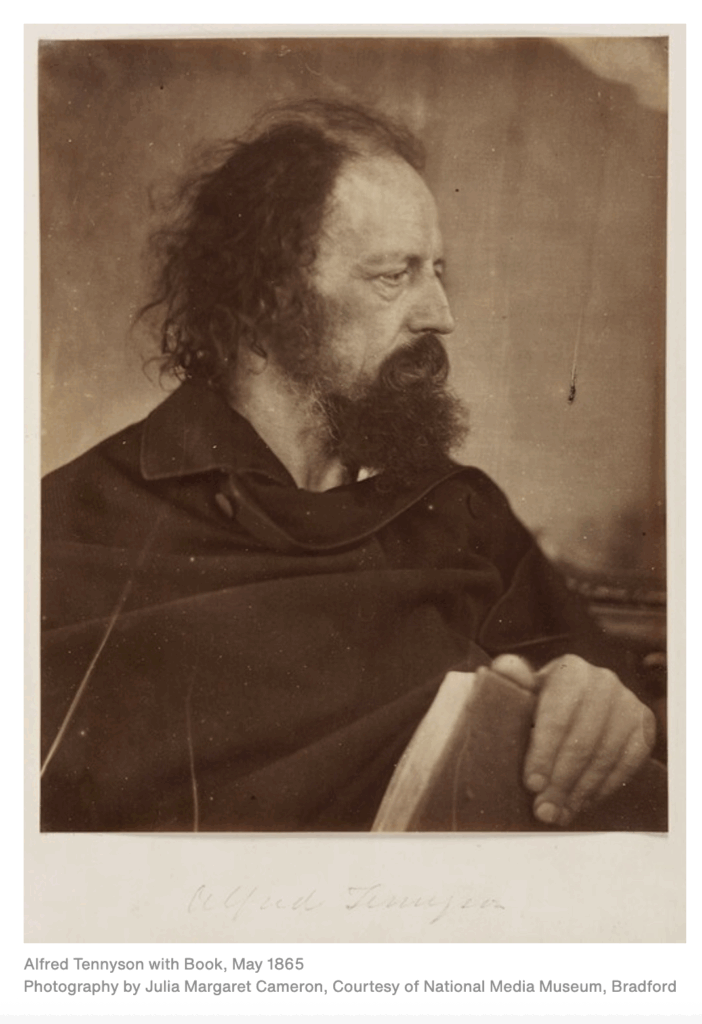
Shortly after first publishing her work, the Victoria and Albert Museum bought 80 of her prints and to date the has one of the biggest collections of her work.[2] Her photos also decorated countless books of poetry. Today her photographic portraits “are considered among the finest in the early history of photography.”[3]
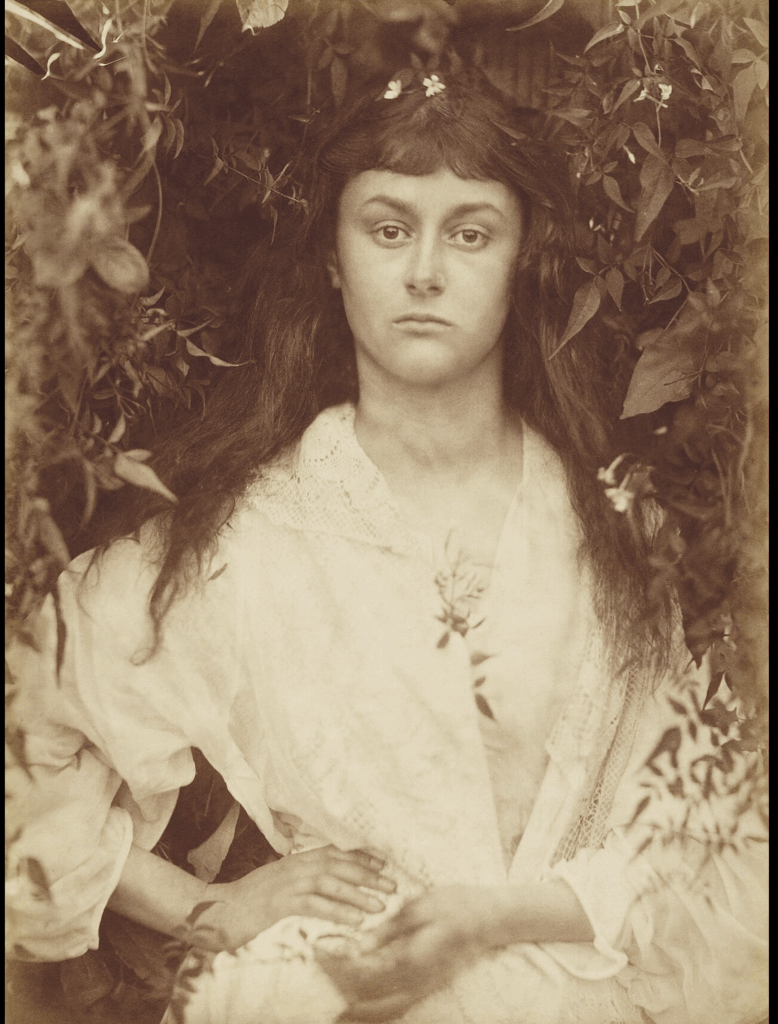
In her 12-year career, Cameron produced 900 photographs.
[1] Malcolm, Janet (4 February 1999). “The Genius of the Glass House”. The New York Review of Books. ISSN 0028-7504. Retrieved 5 May 2019.
[2] https://www.vam.ac.uk/collections/julia-margaret-cameron
[3] Photograph by Julia Margaret Cameron of Alice Liddell: Getty Images #90762993″. Getty Images. 15 September 2009. Retrieved 5 March 2013.
[1] https://www.metmuseum.org/essays/julia-margaret-cameron-1815-1879
Read more
https://www.metmuseum.org/essays/julia-margaret-cameron-1815-1879
https://en.wikipedia.org/wiki/Julia_Margaret_Cameron