Baya
1931 — 1998
Algerian painter
“My painting is not a reflection of the outside world, but of my own world, the world inside me. I put my dreams on paper.”
There are persistent stereotypes about the Middle Eastern that began at the height of the 19th century Orientalist art movement. Western artists created stereotypes of the Arab world as less advanced romantic, exotic fairyland with women lounging in harems. Arab artists were “discovered” and their work celebrated as primitive, childlike and naive.
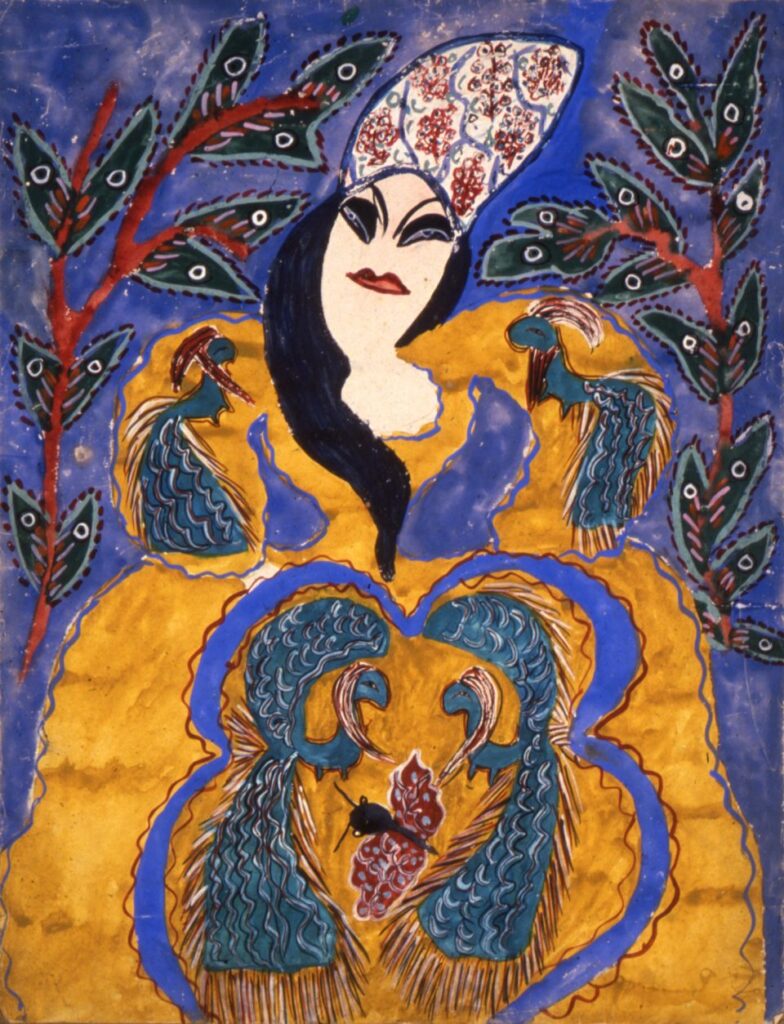
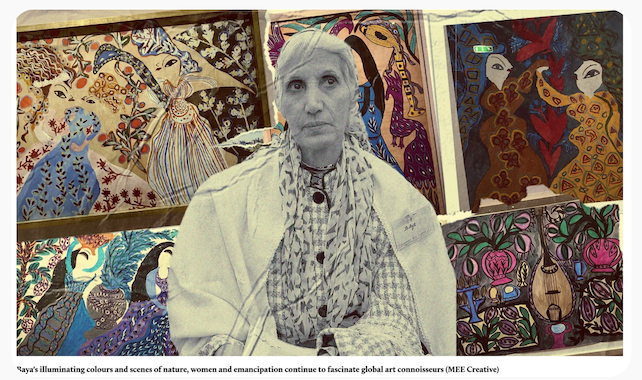
Baya Mahieddine stands out as an artist who reclaimed her art from the male-dominated colonial eye. She was self-taught artist and refused to be labelled as one style, instead calling what she created: Baya-isme.
She was born Fatima Haddad in 1931 in Bordi el-Kiffan, a coastal town on the Kabylian region of Algiers. She lost her parents early in life and grew up in poverty with her grandmother working on a colonial farm.
At 12 she was taken in by the French painter Marguerite Caminat living in Algiers who took note of her artistry. She gave Baya a home to start creating her art. When her gouache painting and clay sculptures were shown to visiting gallery owner, he immediately set up a Paris exhibit.
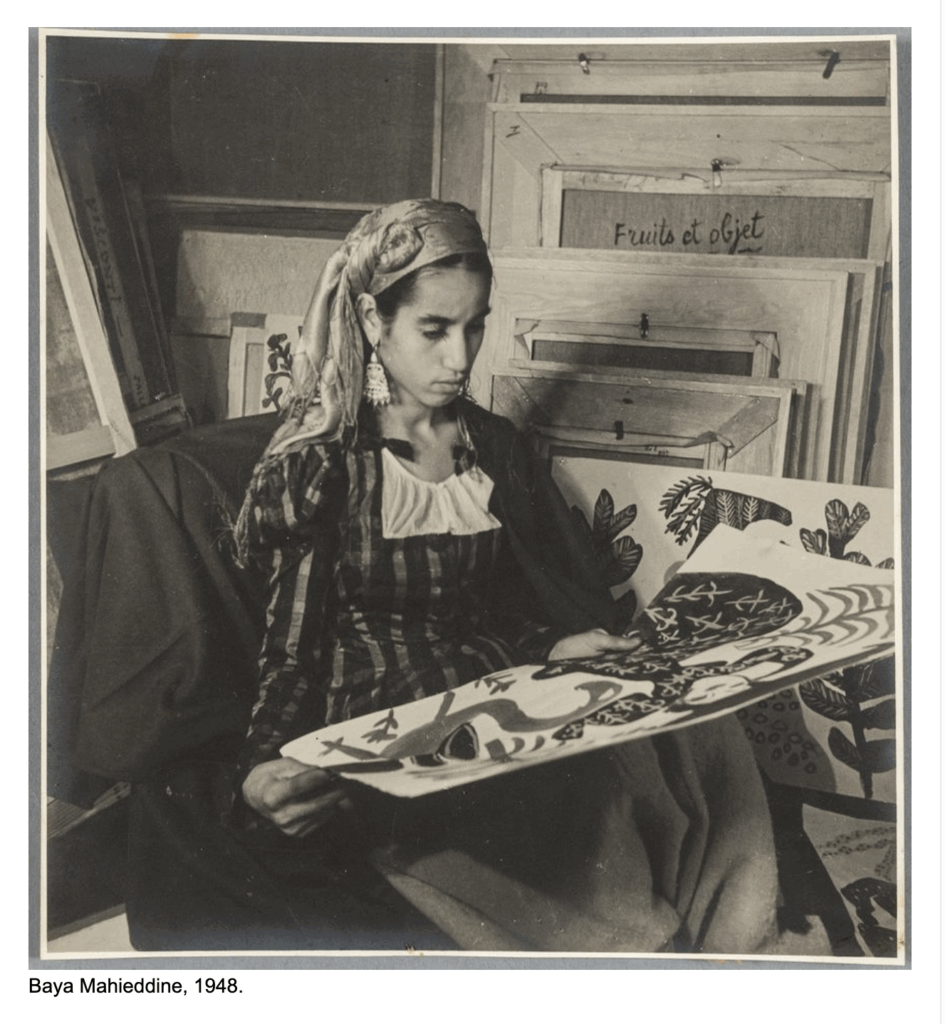
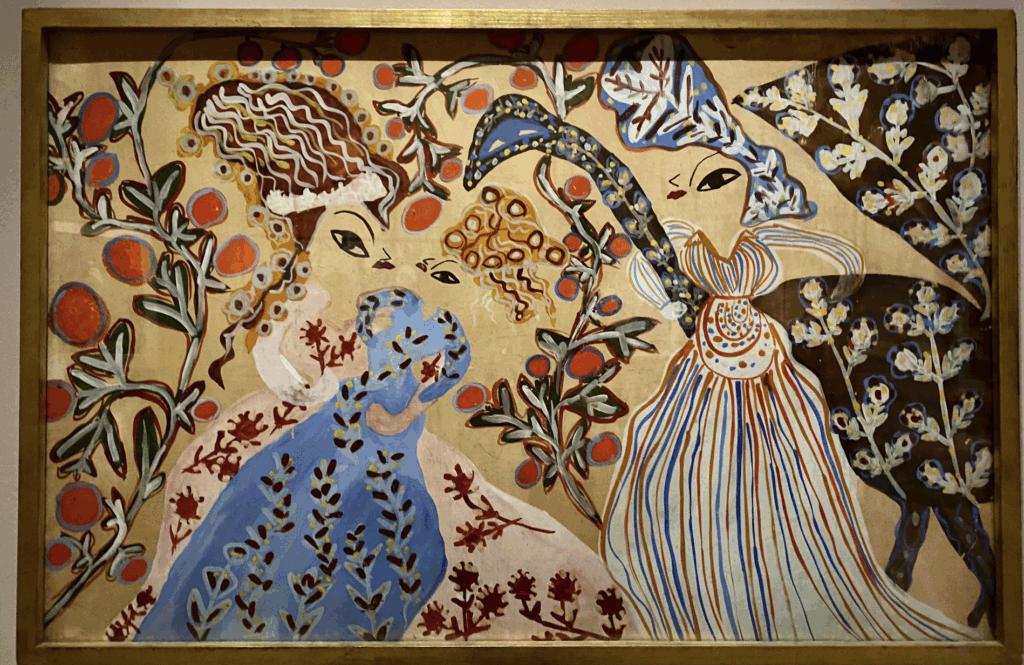
In 1947, there were not many female Arab artists in the global art world so when Baya burst upon Paris, she drew praise from the Surrealists and eventually caught the eye of Picasso. That got her forever branded in the Western world as the “15-year-old who inspired Picasso” despite outliving Picasso by 25-years.
She continued painting until 1953, when at the age of 22 she had an arrange marriage with the musician El Hadj Mahfoud Mahieddine, 30 years her senior. Her marriage coincided with the Algerian War of Independence and to show her support Baya refused to exhibit any work in French cultural institutions. But there probably was little time for art since she gave birth to six children in ten years.
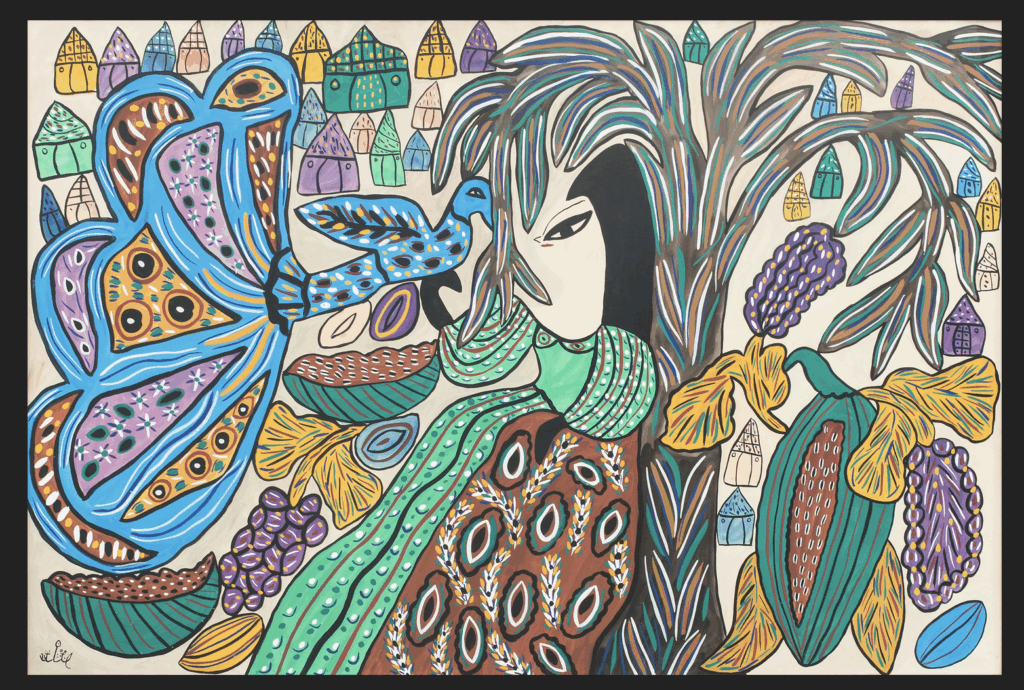
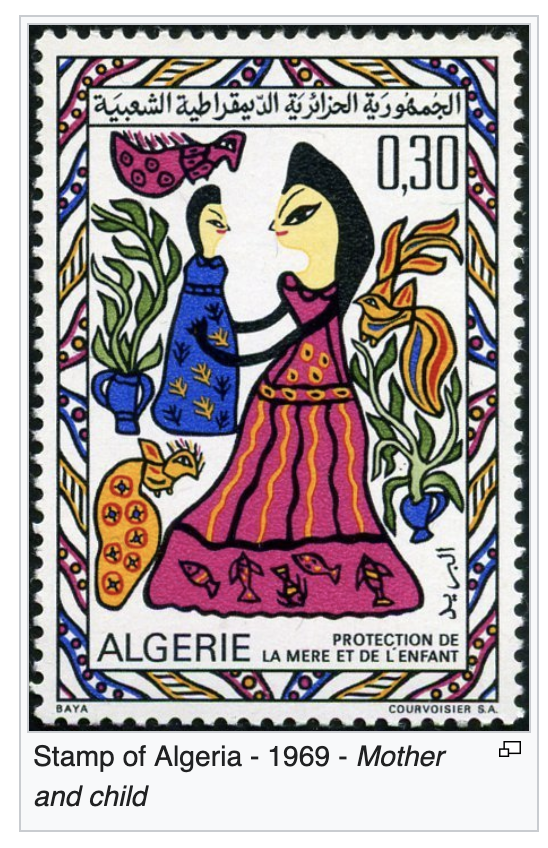
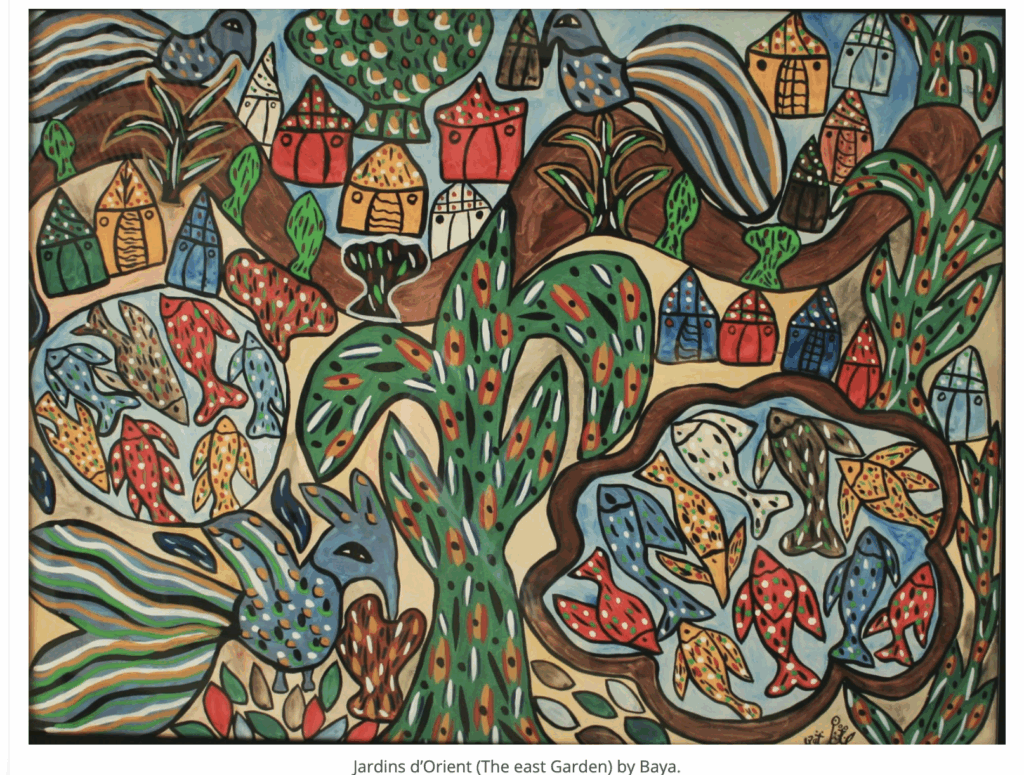
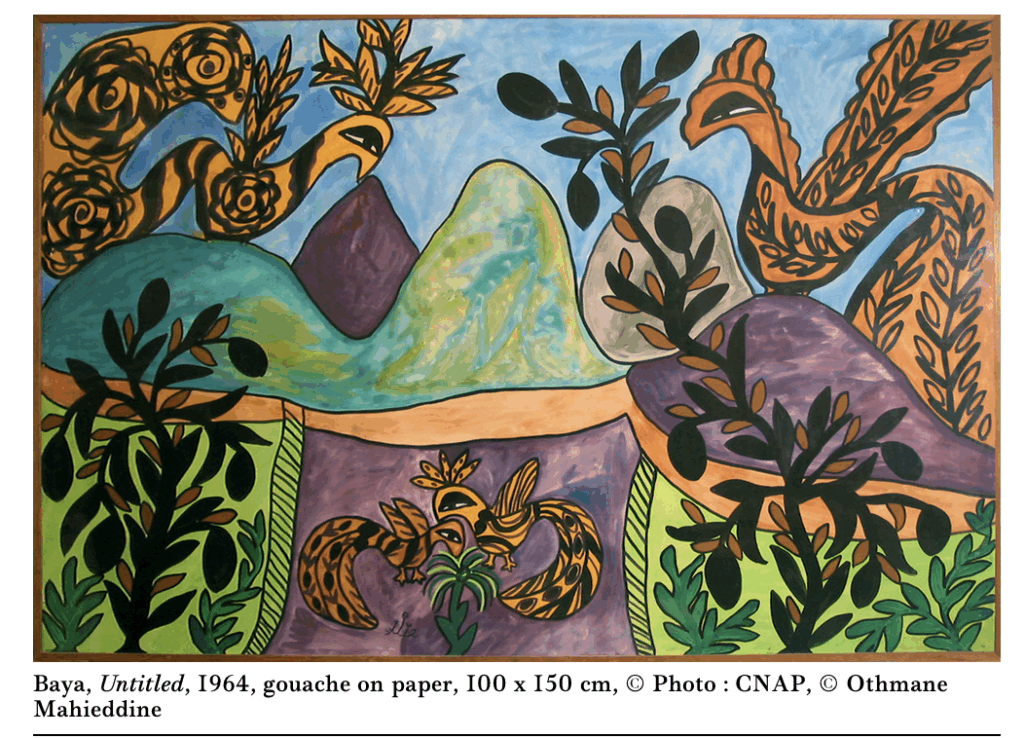
In 1963, with the death of her husband, Baya resumed painting and reemerged as the country’s national painter. In 1969, one of Baya’s paintings depicting a mother and child was used on an Algerian postage stamp.[1] At the encouragement of the director at the Algerian National Museum of Fine Arts, Baya began to paint in larger formats showing women in a vast range of emotions celebrating a feminine universe. A joyful celebration of nature and life with sunny mountains and dunes, with four rivers, the symbolic trees of Algeria — the olive tree and the date palm. A universe where birds sing, fish dance and women soar. [2]
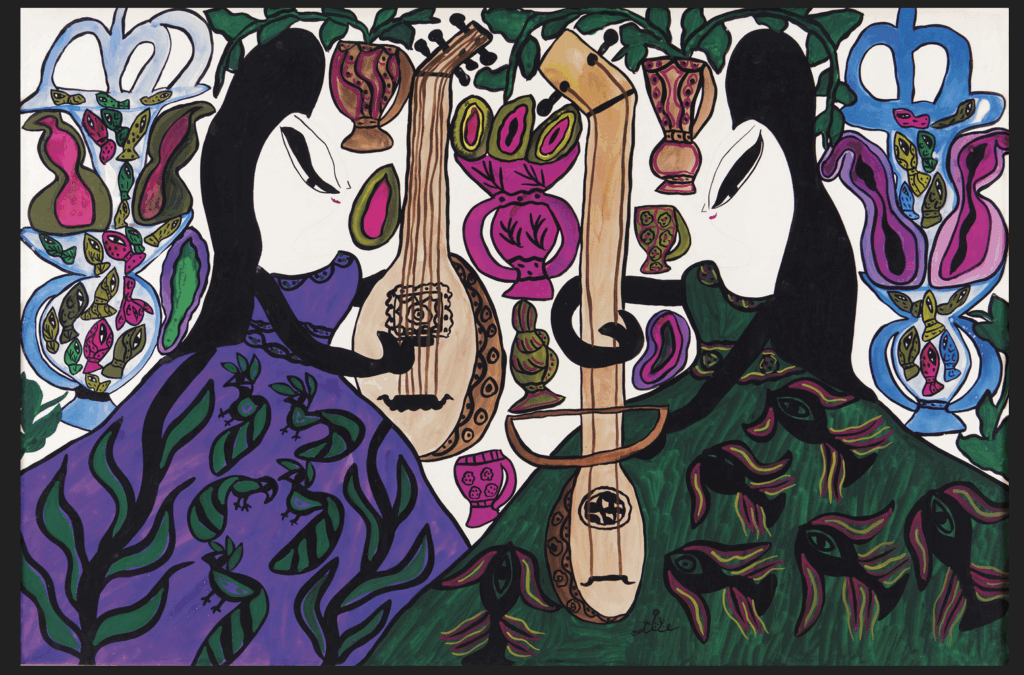
She refused to be claimed by the French as one of their own and maintained her Algerian identity throughout her career. She created a utopian world filled with independent women, wearing colourful dresses, floating through a dreamlike world of exuberant colour. Her women are surrounded by musical instruments, flowers, fruits, birds as they intermingle with intricate shapes and patterns.
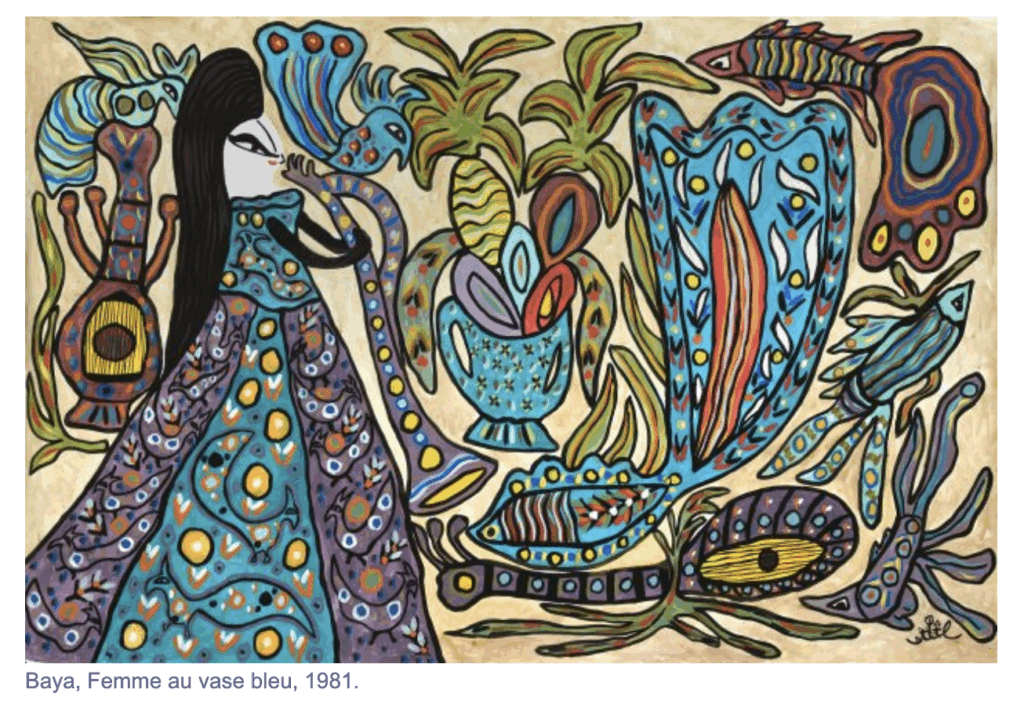
By proclaiming her Algerian identity, and painting a world of strong, joyous women, she created a unique path for other North African female artists. She continued to work until her death in Blida, Algeria on 9 November 1998. [1]
Read more
https://awarewomenartists.com/en/artiste/baya
https://en.wikipedia.org/wiki/Baya_(artist)
https://www.artsy.net/article/artsy-editorial-algerian-teenager-painted-liberated-women-1940s-par
The Algerian pioneering artist few people know
https://www.arabnews.com/node/2205776/lifestyle
[1] https://en.wikipedia.org/wiki/Baya_(artist)
[2] https://www.arabnews.com/node/2205776/lifestyle