Barbara Regina Dietzsch
(1703-1783)
Bavarian painter and engraver
In eighteenth-century Europe the only way to become an artist was to train at one of the exalted art academies and then go on to be apprentice with an existing master. The only problem was women were not allowed to attend any art schools or join any artist guilds. Even when women were allowed to create, their work was often categorized as “lesser.”
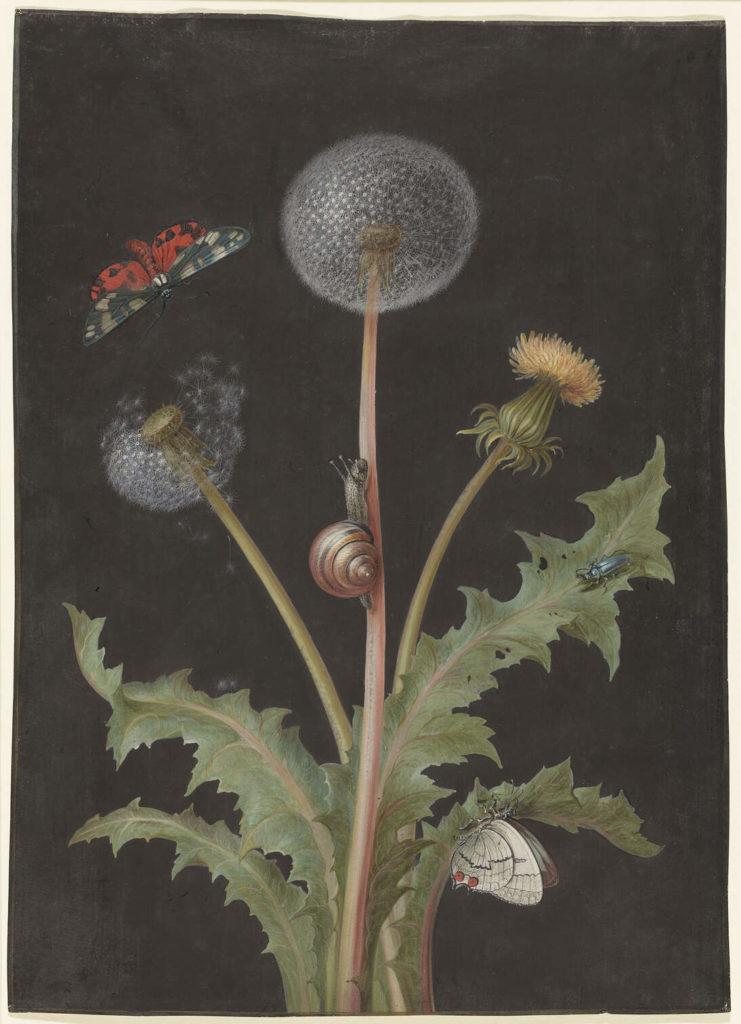
Barbara Regina Dietzsch ignored the obstacles to become an accomplished botanical artist who contributed to the growing scientific categorization of the natural world.
It helped that Dietzsch was born into an artistic family. Her father, Johann Israel Dietzsch (1681–1754), was a landscape painter and engraver. During the late Baroque period, women were allowed to learn artistic skills in order to be unpaid labour in the family business. By the time Dietzsch started her career Nuremberg was already a major centre of precision craftsmanship in the fields of botanical illustrations as well as book printing and illustration. But like most of Europe at the time, these fields were all male dominated.
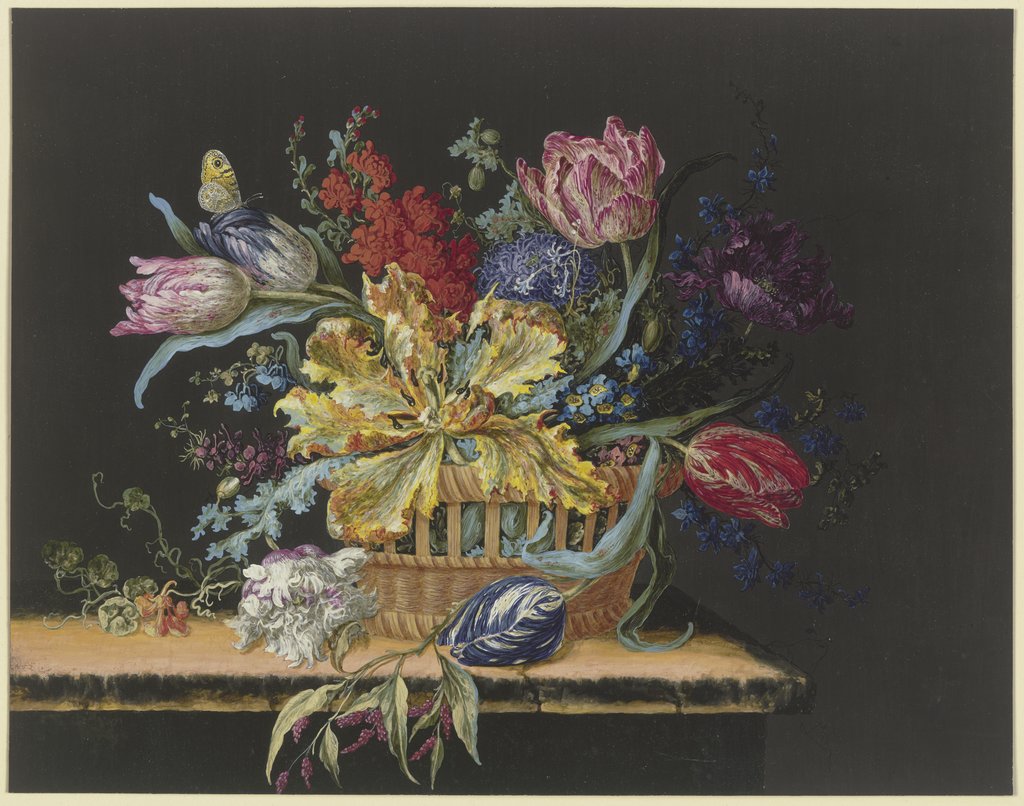
She rose to success because of her detailed and meticulous work. But she also painted flowers that stood out for their luminosity and charm choosing to put them against a black background where their form became dramatic and dynamic. She broke away from the rigid scientific methods that included dry, intellectual identifying inscriptions with a solo plant. Instead she painted flowers being kissed by butterflies and insects; demonstrating the intricate ecological cycle and thereby following in the footsteps of the celebrated entomologist and naturalist Maria Sibylla Merian (1647–1717).
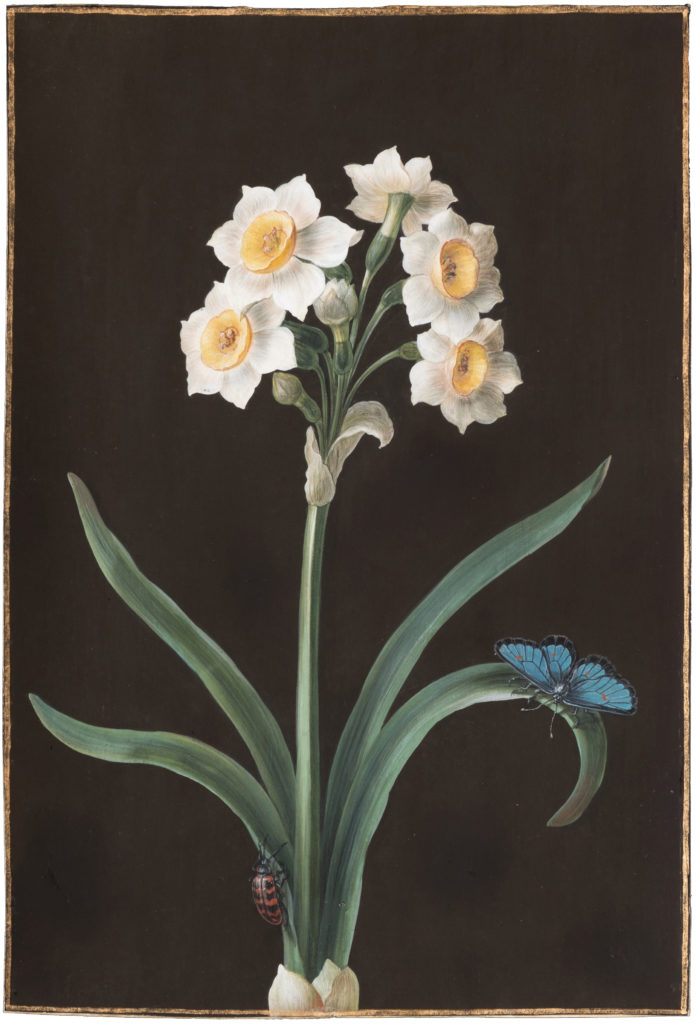
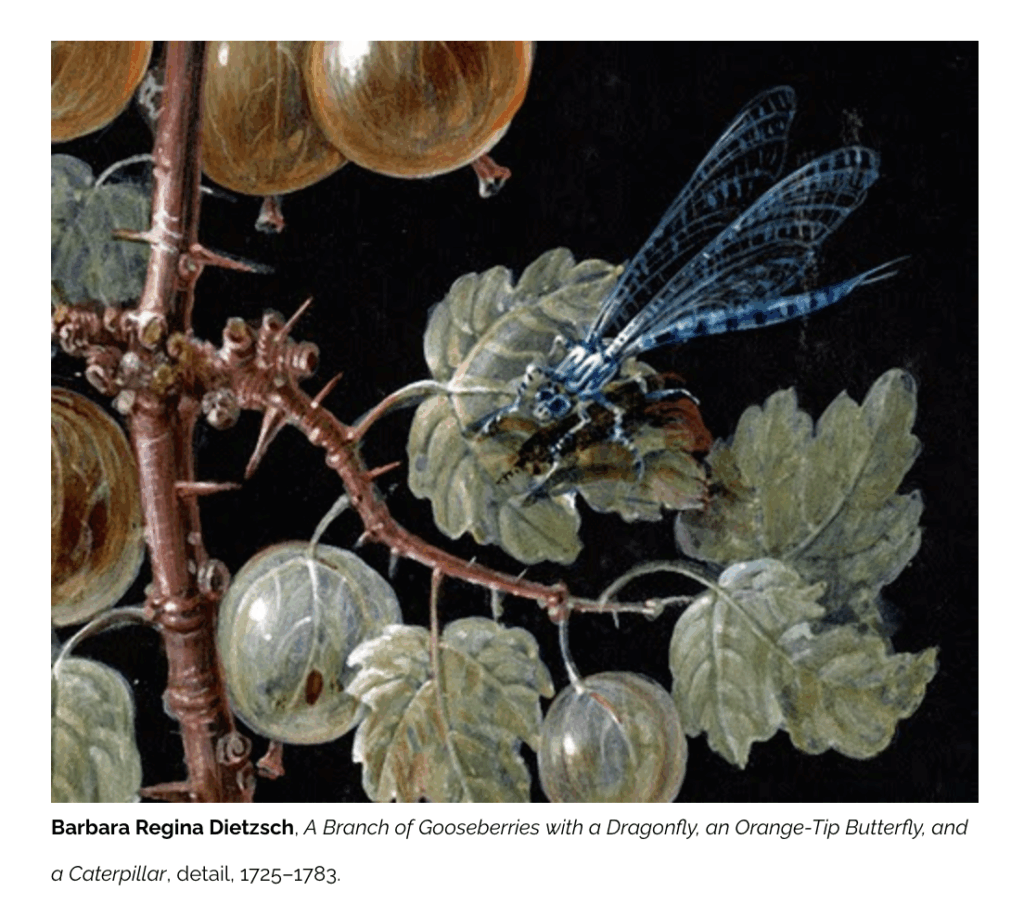
Dietzsch also developed a sophisticated method of watercolour and gouache layering combined with gum Arabic wash to produce a sense of depth of light against her neutral backgrounds. Scientists valued her accuracy or her while collectors appreciated the beauty and delicacy of her work. One viewer of her works in a cabinet said that the cumulative effect was like looking at a garden.[1]
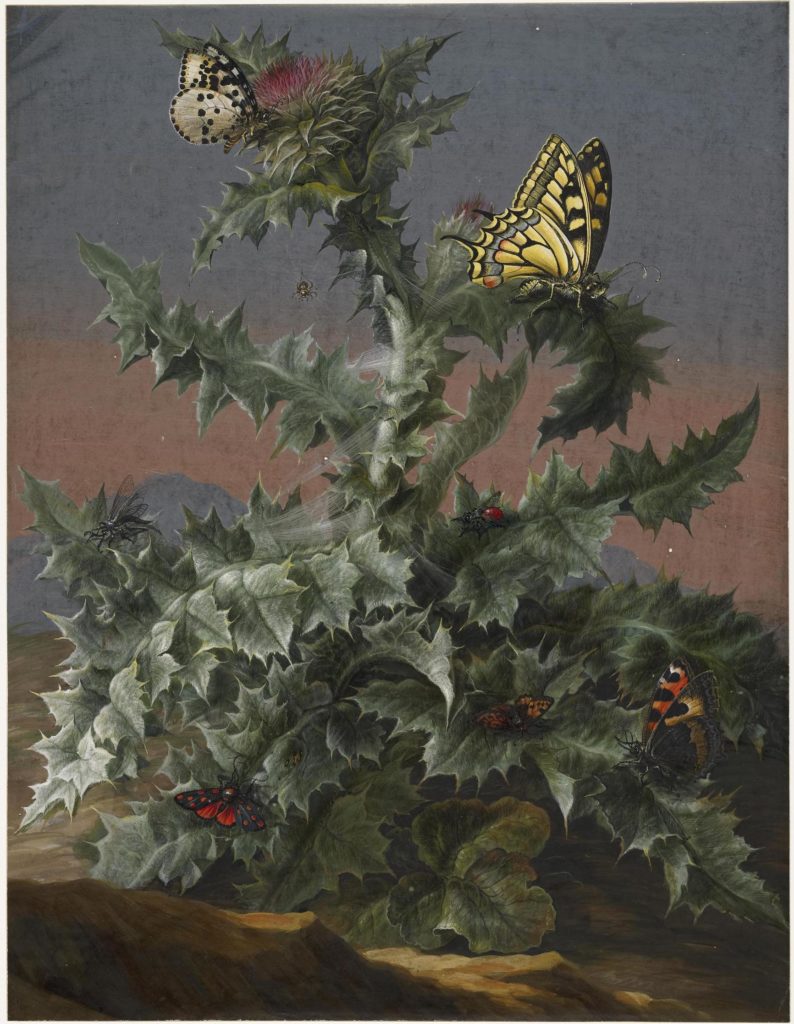
During her lifetime, Dietzsch paintings and engravings became throughout Germany but also in the Netherlands, England, and France. Unfortunately, after death she faded from history and many of her works were simply labelled as from the “Dietzsch family.” It would take several centuries for her work to be rediscovered and her depictions of the ecological relationships to be fully appreciated and understood. Her paintings are now held in prestigious collections as examples of the artistic and intellectual world of 18th-century Europe.
Read more
https://awarewomenartists.com/en/artiste/barbara-regina-dietzsch
https://www.davisart.com/blogs/curators-corner/barbara-regina-dietzsch/https://artherstory.net/barbara-regina-dietzsch-enlightened-flower-painter/
[1] https://www.davisart.com/blogs/curators-corner/barbara-regina-dietzsch/