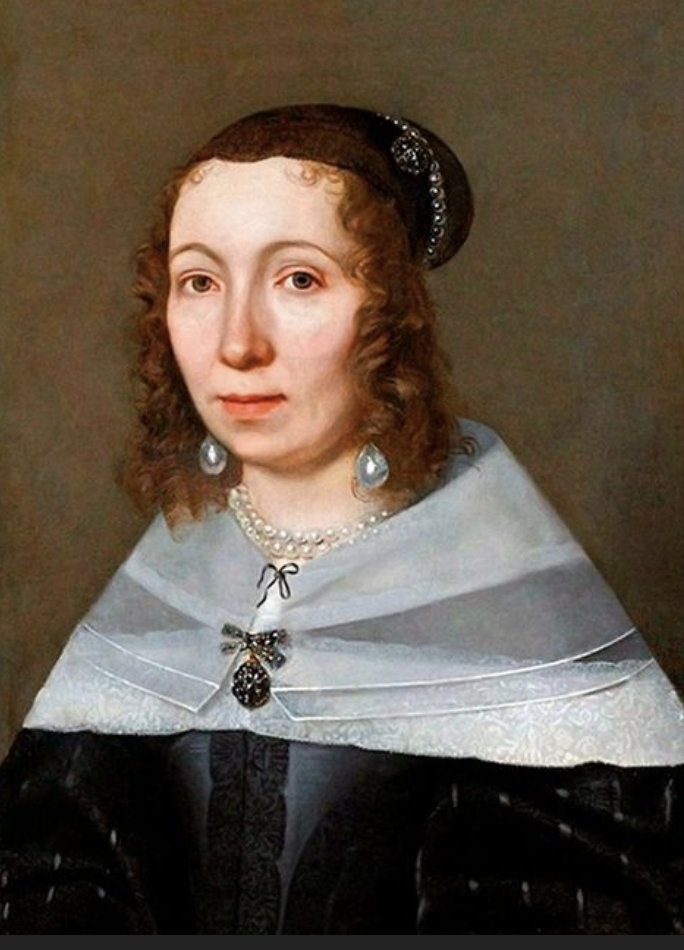
Maria Sibylla Merian
(1647-1717)
German entomologist, naturalist, illustrator, publisher
“It has often happened to me that the most beautiful and rare caterpillars transform into the most ordinary creatures, and the plainest caterpillars turn into the most beautiful moths and butterflies.”
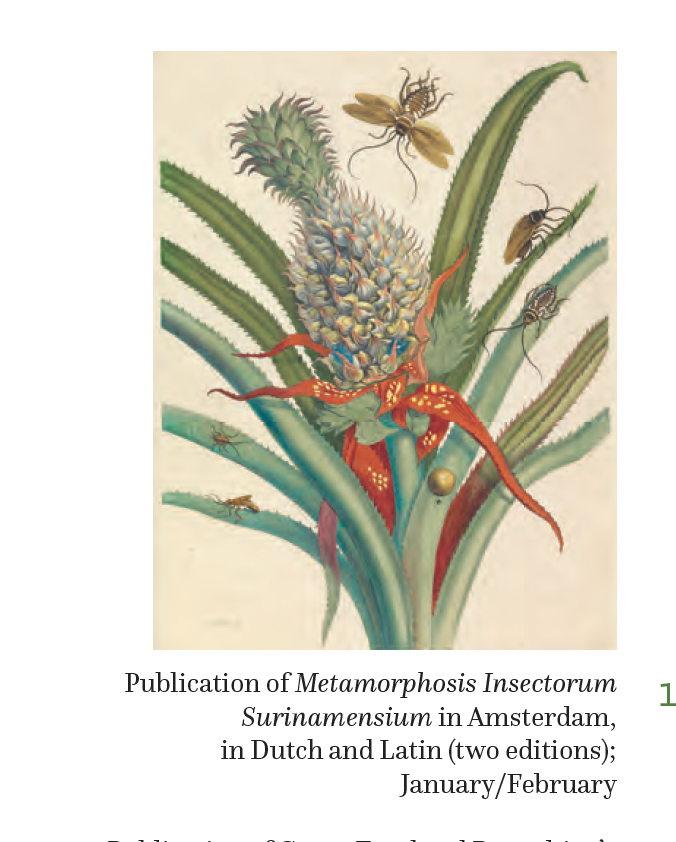
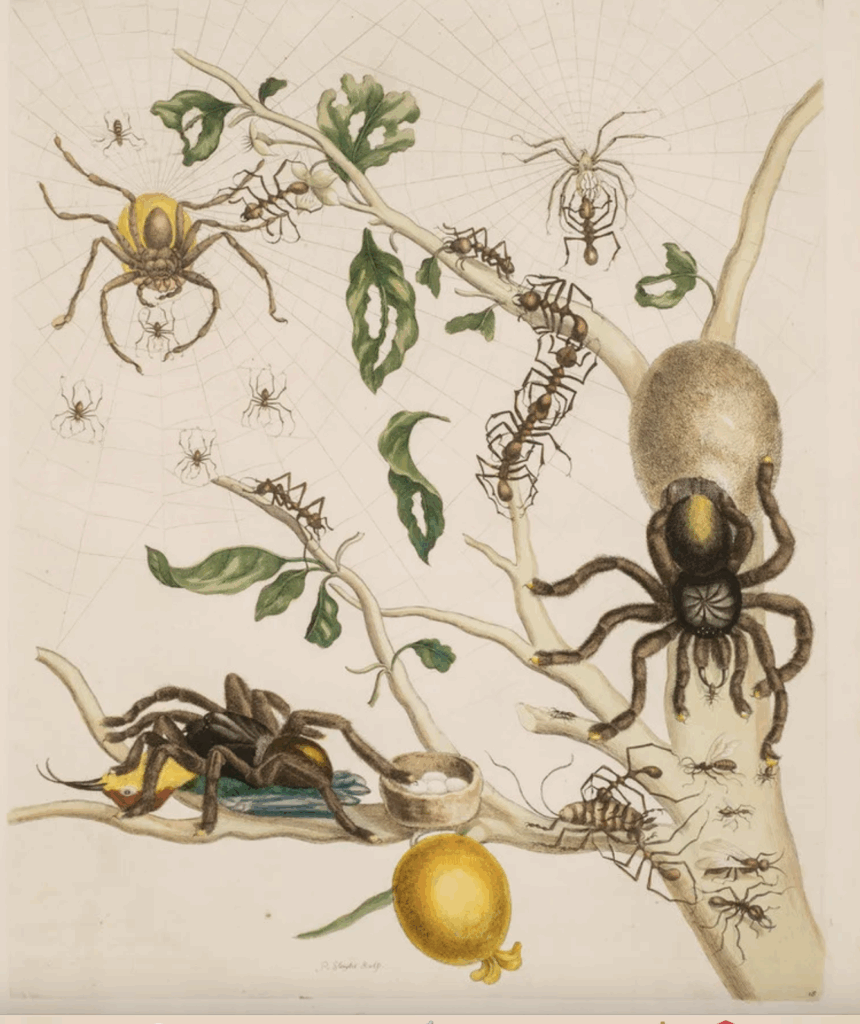
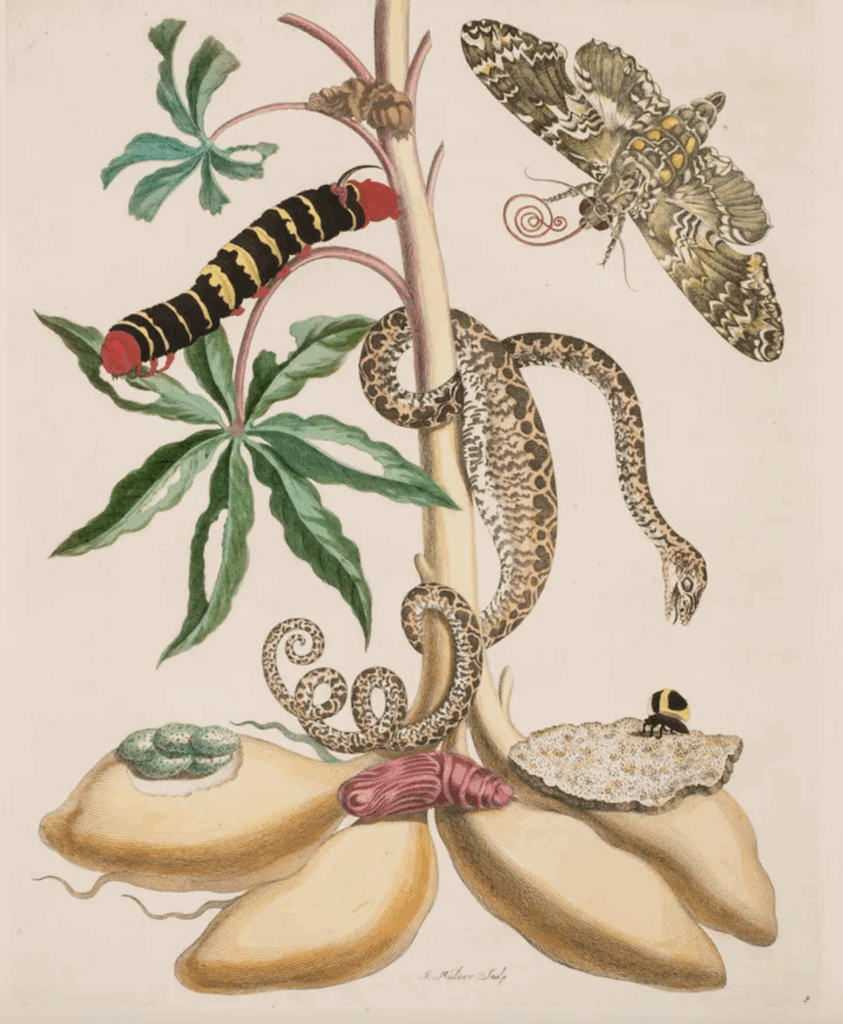
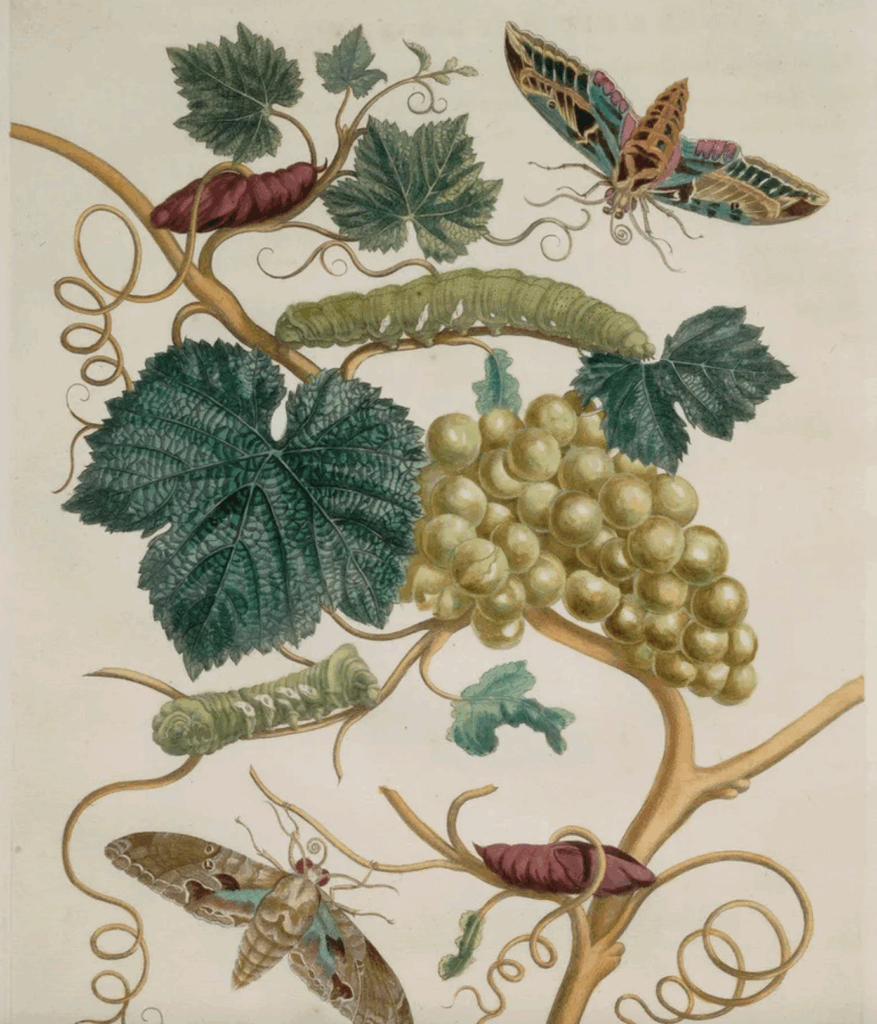
Metamorphosis insectorum Surinamensium
In the 17th century female artists and scientists faced severe restrictions. Women artists were not allowed to use oil paints and were forbidden to paint portraits, nudes or large-scale historical scenes. Female scientists were not allowed to learn Latin, attend universities, listen to scientific lectures or read any scientific research.
Maria Sibylla Merian was both an artist and scientist who ignored these obstacles
She became famous for her illustrations of insects and plants but also for her work on the metamorphosis of moths and butterflies that advanced entomology in the late seventeenth and early eighteenth centuries.[1] She was the first artist-naturalists to do detailed drawings from live insects rather than dead specimens.
Merian was from a family of artists, engravers and publishers who taught Merian the skills she needed to follow her own path, which did not include being the dutiful wife and mother.
In 1665, 18-year-old Merian married Johann Andreas Graff and promptly turned her kitchen into a laboratory.[2] In 1679, one year after the birth of her second daughter, Merian published the first of her two volumes Caterpillar Book with 50 plates; each engraved and etched by Merian along with her descriptions. The second volume followed four years later, again with 50 pictures and descriptions.[3]
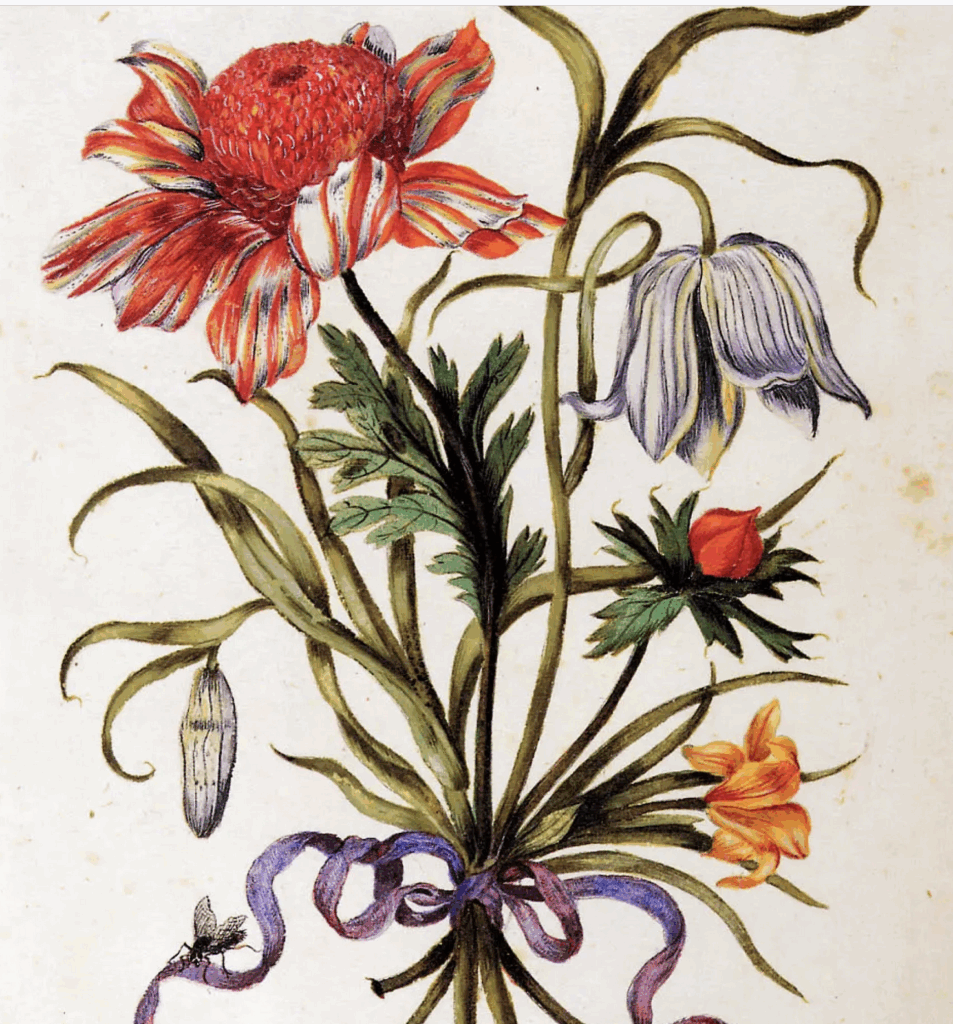
She left her husband in 1685, eventually divorcing him and going to live in Amsterdam with her daughter where she made a living selling her paintings. Agnes Block, the botanist who grew the first European pineapple on her estate hothouses, hired Merian to document her rare plants and flowers.
At 52, Merian set sail with her daughter for the Dutch Colony of Suriname – and over the next 21 months she studied and recorded the tropical insects of Suriname, studying pineapples in detail as well as the medicinal use of plants and animals by the people of Suriname.
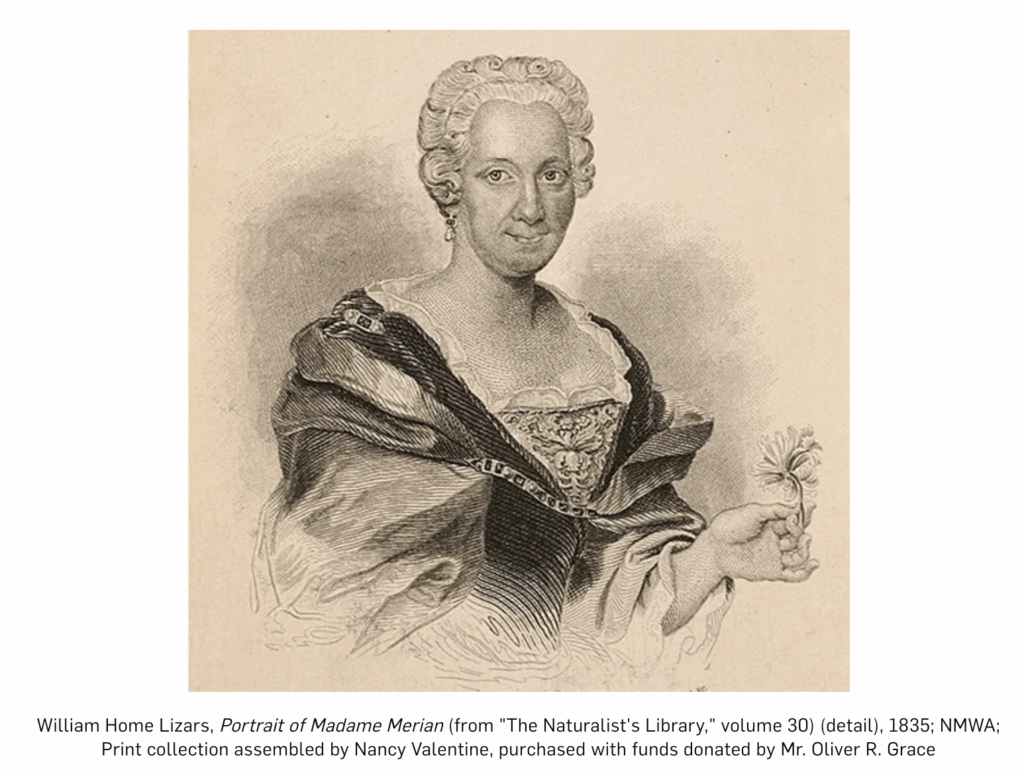
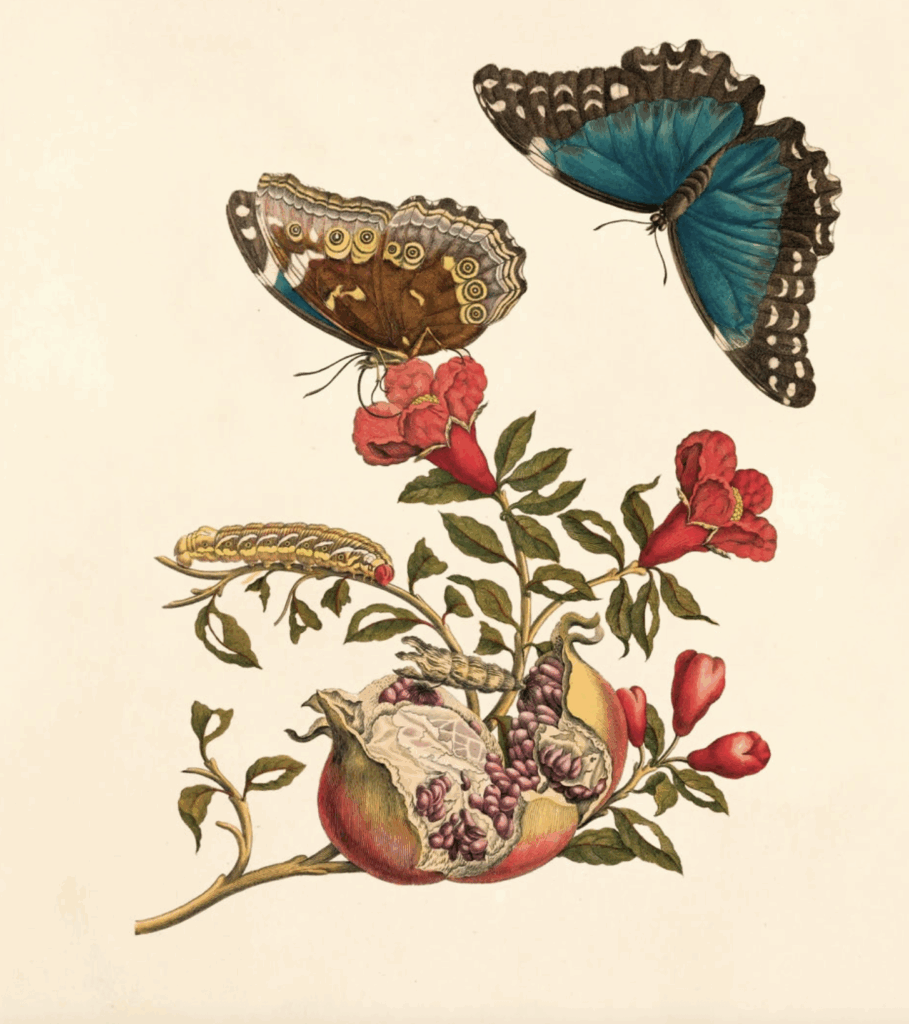
Although she classified everything meticulously, her work was dismissed by the scientific community because she used the indigenous names for identification. In 1705, three years after returning from her expedition, she published Metamorphosis insectorum Surinamensium. Metamorphosis first was published at her own expense.[4]
It made her famous but not rich.
In choosing the humble caterpillar to study and paint, Merian transformed our understanding of insects and the natural world. She bridged the two worlds of art and science during a time when both fields were closed to women.
Metamorphosis has been cited by many scientists and has been credited with influencing a range of naturalist illustrators. It’s still considered relevant today.
[1] https://www.britannica.com/biography/Maria-Sibylla-Merian
[2] Kim Todd. Chrysalis: Maria Sibylla Merian and the secrets of metamorphosis. Place: Harcourt Inc., 2007), 58-59.
[3] David Attenborough et al. “Great diligence, grace and spirit.” In Amazing Rare Things The Art of Natural History in the Age of Discovery, 138-170. (Place: Yale University Press, 2015), 141.
[4] https://en.wikipedia.org/wiki/Maria_Sibylla_Merian
Read more
https://www.themariasibyllameriansociety.humanities.uva.nl
https://en.wikipedia.org/wiki/Maria_Sibylla_Merian
https://www.britannica.com/biography/Maria-Sibylla-Merian